
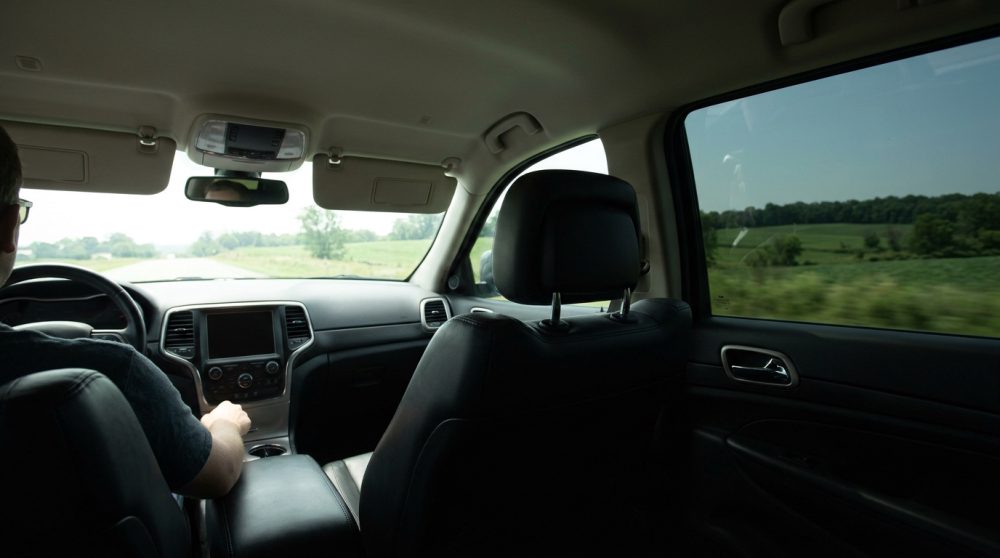
For most drivers who spend real time in the sun, yes, ceramic window tint is worth it. Its main advantage is heat. A good ceramic film can cut more of the sun's heat than a dyed film at the same visible darkness, so you can keep a lighter, easier-to-see-through shade and still have a cooler cabin.
If your car sits outside all day, you commute into low sun, or you want the cooling without going dark, ceramic usually earns the extra cost. If you mostly want privacy and a cleaner look, and the car lives in a garage, a standard film can be a perfectly reasonable choice. Here's how to tell which camp you're in.
What "ceramic" actually means on a window
Ceramic tint is a film with microscopic ceramic particles built into it. Those particles are good at blocking infrared light, which is the part of sunlight you feel as heat. They do it without the metal content that older performance films relied on.
That last detail matters in a modern car. Metallic films can interfere with cell service, GPS, and key fob signals. Ceramic films are non-metallic, so that isn't a concern.
The word "ceramic" on a quote doesn't tell you how good the film is, though. Films vary a lot between brands and even within one brand's lineup. Ask for the specific product name and its spec sheet.
Darkness and heat rejection are two different things
This is the most common misunderstanding about tint. How dark a film looks has very little to do with how much heat it blocks.
- Visible light transmission (VLT) is how much visible light passes through. A lower number means a darker window.
- Heat rejection is how much solar energy the film keeps out. It's measured separately, and manufacturers publish it in different ways.
A dark dyed film can look aggressive and still let a fair amount of heat through. A light ceramic film can look almost clear and still make a noticeable difference on a hot day. When you compare quotes, don't compare shades. Compare the film's published heat and UV numbers, and check that the numbers are measured the same way.
Dyed, carbon, and ceramic: a plain comparison
| Film type | What it's good at | Trade-offs |
|---|---|---|
| Dyed | Privacy, a uniform dark look, lower cost | Typically the least heat rejection; quality varies widely |
| Carbon | A flat, matte-black look and better performance than basic dyed film | Usually sits between dyed and ceramic on heat rejection |
| Ceramic | Strong heat and UV control, good clarity, no signal interference | Costs more up front |
Those are general patterns, not guarantees. A premium dyed film can beat a cheap ceramic one. That's why the brand and the specific product line matter more than the category label.
Where LLumar fits in
Culture Customs installs LLumar window film and is certified through LLumar for automotive and architectural tint installation. The automotive lineup we work with includes ATC, CTX, and AIR windshield film.
- ATC is the more traditional, non-ceramic option for people who want the look and privacy of tint at a friendlier price.
- CTX is the ceramic film, the one to look at if heat and UV control are the priority.
- AIR is a windshield film. The windshield is the biggest piece of glass on your car, and a dedicated film there can make a noticeable difference in how hot the cabin feels.
Exact heat rejection, UV, and warranty figures are published by the manufacturer for each product. Ask to see the current spec sheet for whichever film you're considering instead of relying on a rough number from a conversation. Warranty terms and package pricing are set by the shop and the manufacturer, so get those in writing too.
Who benefits most from ceramic
- Commuters and road-trippers. Hours of sun on your arm and lap add up, and less heat means the A/C works less.
- Anyone parking outside. Work lots, driveways, and street parking mean the cabin soaks up a lot of heat.
- Families. Rear passengers, especially kids in car seats, sit right next to big windows. UV and heat control back there is a real comfort gain.
- People who don't want a dark look. Ceramic lets you go lighter and still get meaningful performance.
- Owners of newer vehicles. Non-metallic film keeps electronics and signals out of the equation.
Ohio isn't Arizona, but summer sun on a parked car still gets uncomfortable, and winter has its own issue: low, bright sun that creates glare on a commute. Tint helps cut that glare too.
Who can skip it
If the car is garaged most days, you rarely drive in strong sun, and you mainly want privacy for what's in the back seat, a quality non-ceramic film may be all you need. Spending more on film you won't notice isn't a good use of money. A good installer should be willing to tell you that.
Installation matters as much as the film
Even a premium film looks bad if it's installed carelessly. Dust under the film, crooked edges, and gaps near the glass edge are installation problems, not film problems. When you shop around, look for:
- A clean, enclosed work area with little airborne dust
- Film cut and fitted precisely, with consistent edges
- Clear information on what the warranty covers and who honors it
- A willingness to explain the film choice, not just quote a price
A note on Ohio tint rules
Every state limits how dark your windows can be, and the limits often differ by window position, such as the windshield, front sides, and rear. Windshield rules in particular tend to be stricter. Ohio's rules and any exemptions can change, so check the current statute or ask your installer before you pick a shade. Don't assume a darkness that's allowed in another state is allowed here.
Frequently asked questions
What is a ceramic tint window?
It's a car window with a film applied that contains ceramic particles. Those particles block a large share of the sun's infrared heat and UV light while keeping the film non-metallic, so it doesn't interfere with signals.
Can I see at night with ceramic tint?
It depends mostly on how dark the shade is, not on whether the film is ceramic. A lighter shade is easy to see through at night, and ceramic's heat performance doesn't depend on going dark. If you drive a lot after dark or have trouble with night vision, choose a lighter shade and stay within Ohio's legal limits.
Is it good to tint car windows?
For most people, yes. Tint reduces heat, glare, and UV exposure, adds privacy, and can help protect your interior from fading over time. The key is choosing a film that fits how you use the car and installing it well.
What's the darkest you can tint your windshield?
Windshields are the most tightly regulated glass on the vehicle, and the rules often allow only a limited strip at the top or a very light film. Because the rules change, confirm the current Ohio requirements before you choose anything for the windshield. A clear heat-rejecting film like AIR is built for this situation, since it works without making the glass noticeably darker.
How do I care for tinted windows?
- Follow your installer's advice on when to roll the windows down. Many shops ask you to wait a few days so the film can cure.
- Expect some haze or small water pockets at first. They usually clear as the film dries.
- Clean with an ammonia-free glass cleaner and a soft microfiber towel.
- Avoid abrasive pads, razor blades, and stickers on the inside of the glass.
- Be gentle around the edges, especially near the window seals.
Choosing without the pressure
The simplest way to decide is to start with how you use the car. Think about when it's parked, who rides in it, and how much sun you deal with, and then choose the film that fits. If you'd like to talk it through, Culture Customs Detail & Power Wash is at 301 S Wooster Ave in Strasburg, and you can reach us at 330-331-9572. We can show you the LLumar options, explain the differences, and help you pick a shade that works for your vehicle and for Ohio's rules. Veterans, active-duty service members, and first responders get 10% off.
